







January often arrives with a strange mix of pressure and fatigue. The calendar flips, routines restart and expectations quietly stack up. Suddenly, everything feels LOUD.
Alongside this reset comes a constant message to bounce back. Social feeds fill with fresh starts, strict routines and instant transformations. It can feel like everyone else has already found their rhythm while you are still finding your footing.
If you feel wired but tired, overwhelmed for no obvious reason, or like your mind has not quite caught up with the year yet, this might not be a motivation issue. It may simply be your nervous system adjusting after a period of disruption.
The holidays stretch sleep, stimulation, food, alcohol, social time and screen exposure in every direction. January then asks your body to snap back into structure almost overnight. For many people, that transition takes longer than expected.
This season is not about forcing momentum, it is about taking small, consistent steps that allow your nervous system to settle. Sustainable support will always work better than sudden overhauls.
Why January Feels Loud
Your nervous system thrives on rhythm and predictability.
December often brings later nights, irregular meals, emotional highs, social overload, increased screen time and less recovery. Even when the season is joyful, it places extra demand on the nervous system.
By January, the body might still be processing that stimulation while being asked to return to productivity, early mornings, decision making and focus. This mismatch can create a sense of internal pressure even when nothing feels obviously wrong.
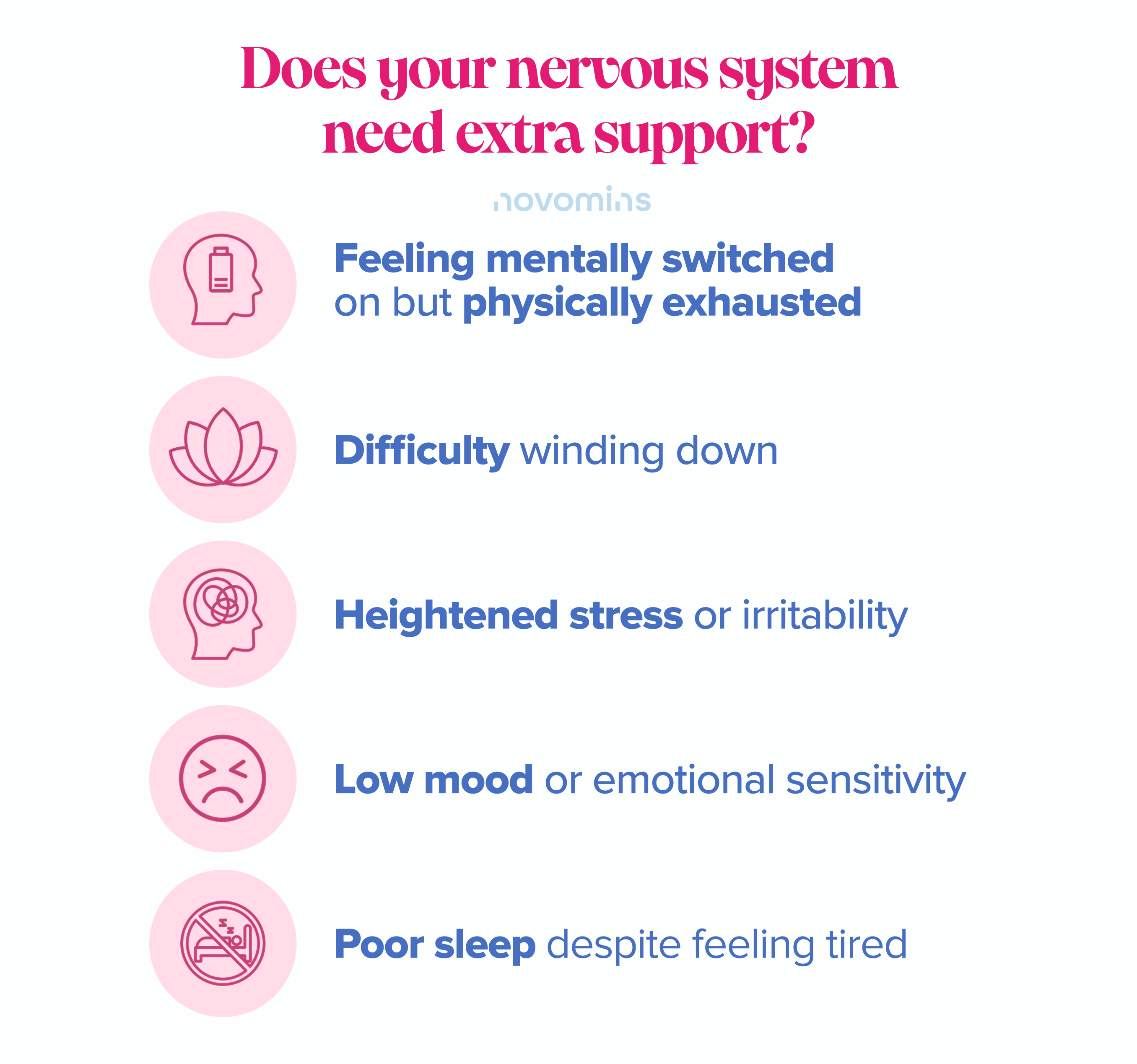
Common signs the nervous system may need extra support include
- Feeling mentally switched on but physically exhausted
- Difficulty winding down in the evening
- Heightened stress or irritability
- Low mood or emotional sensitivity
- Poor sleep quality despite feeling tired
These are not signs of weakness. They might just be signals the body needs a little extra support.
View as text
Does your nervous system need extra support?
- Feeling mentally switched on but physically exhausted
- Difficulty winding down
- Heightened stress or irritability
- Low mood or emotional sensitivity
- Poor sleep despite feeling tired
Why Magnesium Matters in January
January is a transition month where the body is shifting from stimulation back to structure, from late nights to earlier mornings, from constant activity to routine.
During periods of stress, disrupted sleep or routine changes, magnesium demand can increase. At the same time, intake often drops due to irregular meals or reliance on convenience foods during the holidays.
This combination can make January feel heavier than it needs to.
Rather than pushing through fatigue or forcing productivity, magnesium can help support the body’s ability to settle, focus and recover at its own pace.
Magnesium: Then vs Now
Fatigue. Muscle cramps. Anxiety. Insomnia. These symptoms might sound unrelated, but they’re often linked to the same root cause: magnesium deficiency.
Despite its importance, inadequate magnesium intake is common. Research suggests that 60% of adults do not consistently meet recommended magnesium intake levels through diet alone.
Modern diets rich in refined grains, added sugars, and processed foods are low in magnesium. Studies show that processing, boiling and refining vegetables and grains can result in 80% to 90% loss of magnesium content.
Top that off with lower nutrient content due to intensive farming and it's easy to see why magnesium deficiency is becoming more common.
View as text
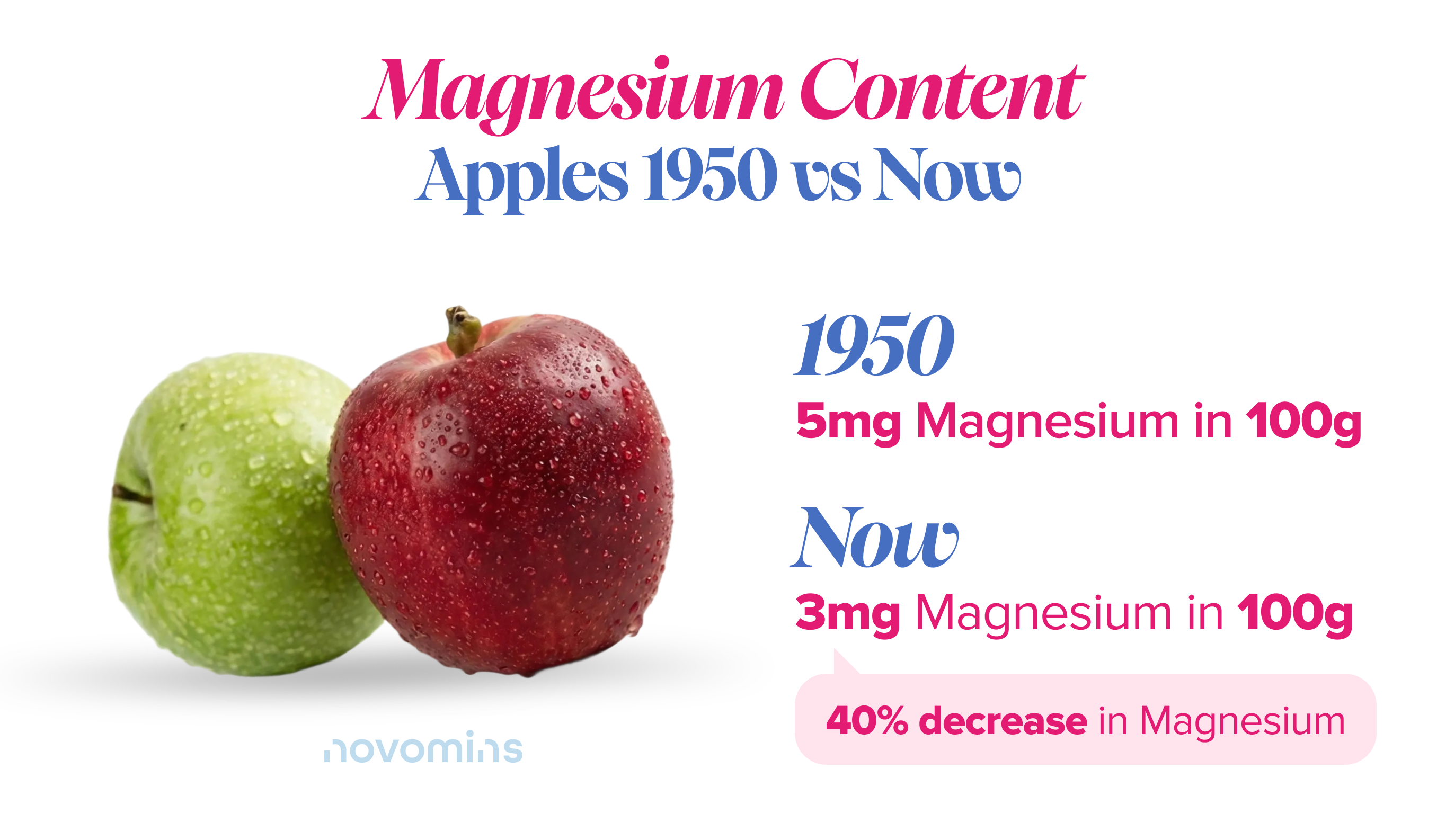
Magnesium Content: Apples 1950 vs Now
- 1950: 5mg Magnesium in 100g
- Now: 3mg Magnesium in 100g
- 40% decrease in Magnesium
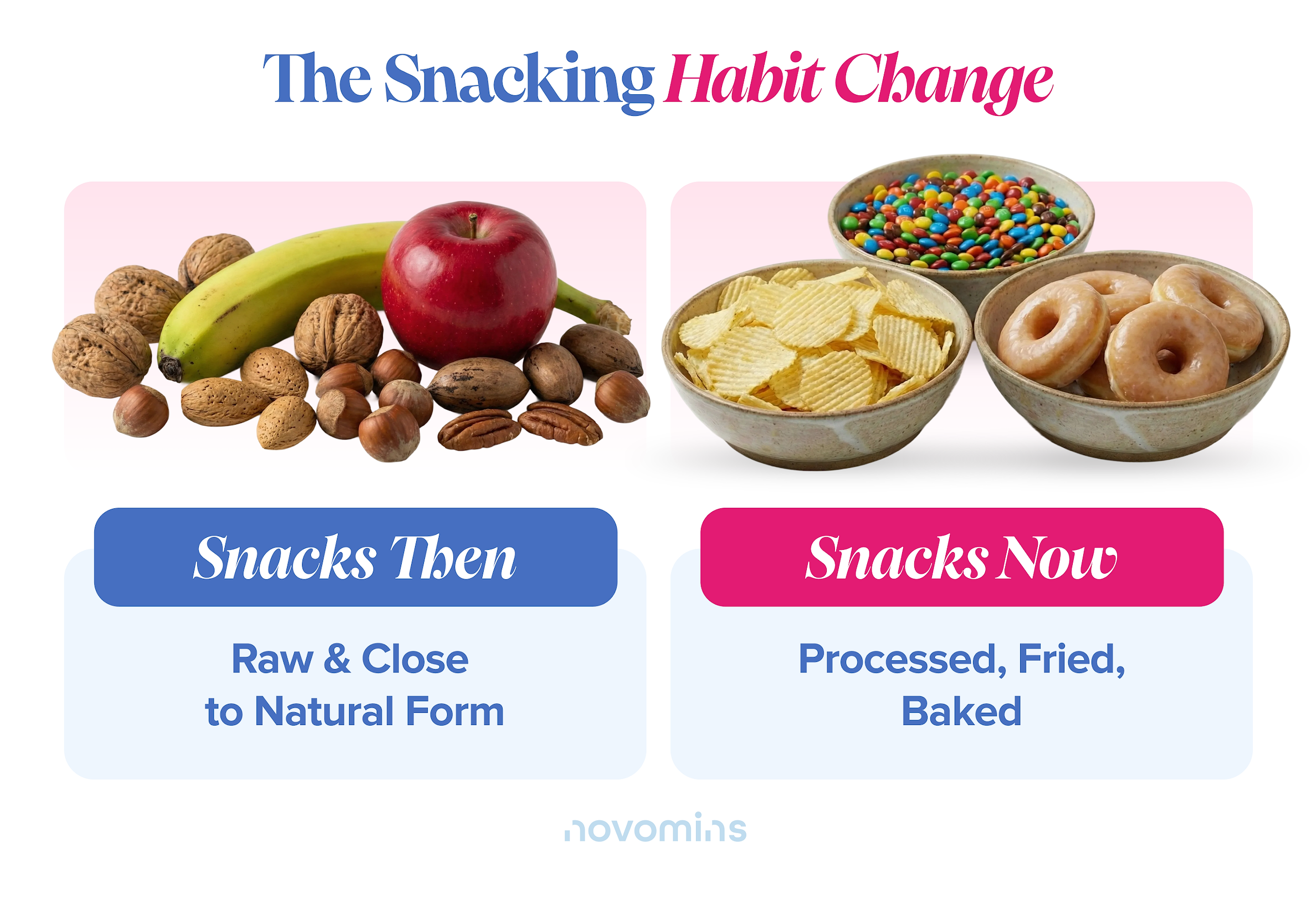
Furthermore, in today's fast-paced world, increased consumption of fast food and ultra-processed snacks means that instead of reaching for a raw, unprocessed banana, it's often a processed snack instead.
View as text
The Snacking Habit Change
- Snacks Then: Raw & Close to Natural Form
- Snacks Now: Processed, Fried, Baked
Why Supplement with Magnesium
Magnesium plays a role in 300+ vital processes in the body and is considered vital for almost every cell in the body to function optimally.
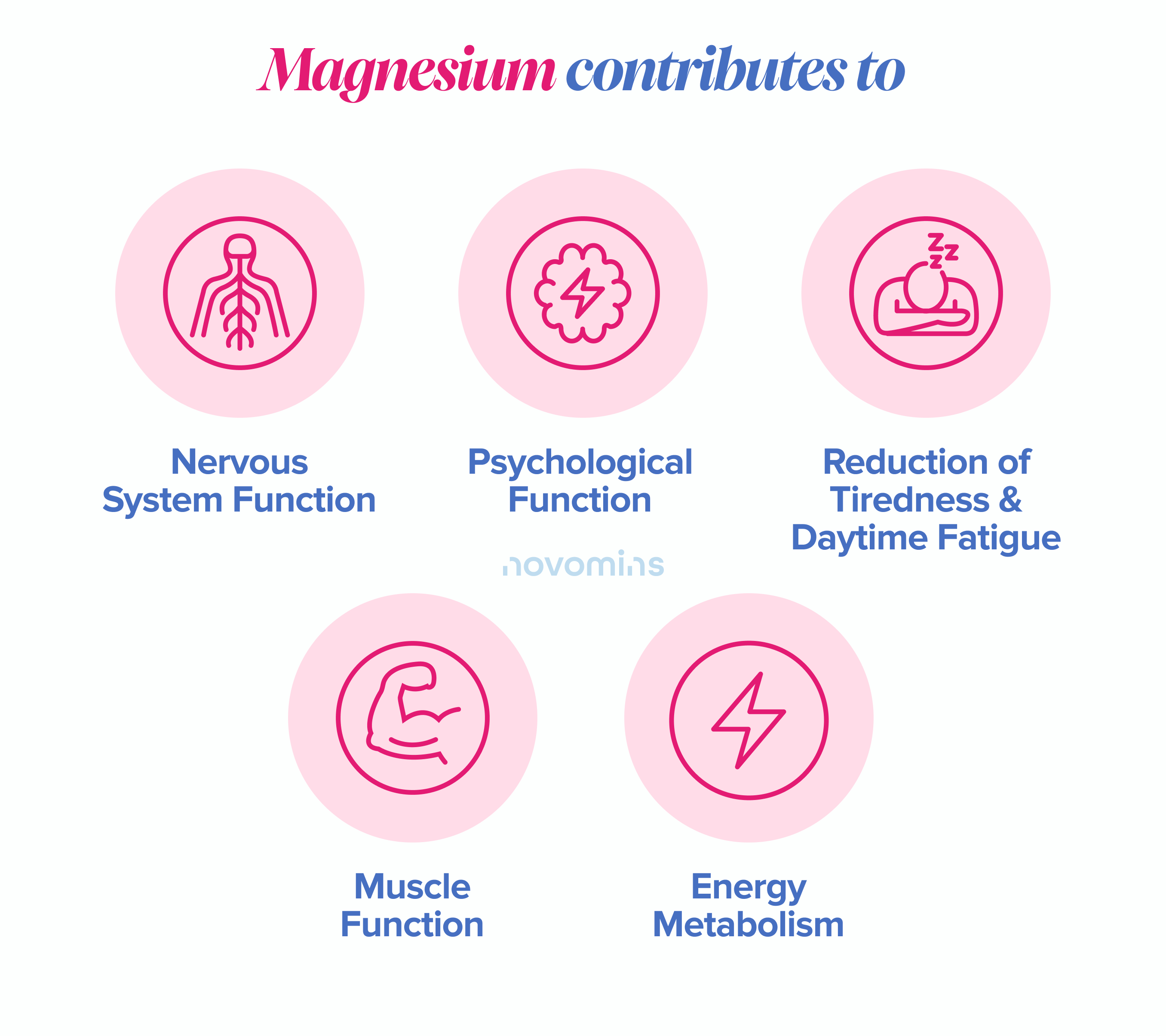
Magnesium contributes to
- Normal functioning of the nervous system
- Normal psychological function
- Reduction of tiredness and fatigue
- Normal muscle function
- Normal energy metabolism
Around 60% of the body’s magnesium is stored in bone, with the remainder found in muscles, soft tissues and bodily fluids such as blood.
View as text
Magnesium contributes to
- Nervous System Function
- Psychological Function
- Reduction of Tiredness & Daytime Fatigue
- Muscle Function
- Energy Metabolism
Magnesium Forms That Matter
While magnesium itself is essential, the form it comes in matters. Different forms are absorbed and used slightly differently by the body, which is why choosing the right type can make a difference depending on what your routine needs most.
Two of the most commonly used and well tolerated forms are magnesium glycinate and magnesium citrate. Each supports the body in a slightly different way.

View as text
Magnesium: 2 Forms Optimally Absorbed
- Magnesium + Glycine = Magnesium Glycinate
- Magnesium + Citric Acid = Magnesium Citrate
Magnesium Glycinate
Magnesium Glycinate is Magnesium bound to Glycine.
Glycine occurs naturally in the body and in protein rich foods.

View as text
Dietary Sources of Glycine
- Meat
- Fish
- Peanuts
- Pumpkin Seeds
- Broccoli
- Spinach
Research has extensively explored glycine’s role in sleep quality, cognitive processes and nervous system activity, particularly in relation to how the body winds down and recovers.
A few of these include:
- 😴 Sleep Quality: Studies show that it may help increase sleep efficiency, and promotes deeper, more restful sleep. It achieves this by helping to lower core body temperature and modulating neurotransmitters involved in the sleep-wake cycle.
- ⚡️ Enhanced Memory and Cognitive Function: Studies have shown that supplemental glycine can improve attention and episodic memory and it may help with age-related cognitive decline.
- 🧠 Neuroprotective Effects: Glycine acts as a neurotransmitter and has anti-inflammatory properties that may help protect neurons from damage caused by oxidative stress and inflammation, which are factors in neurodegenerative diseases like Alzheimer's and Parkinson's disease.
- 🫶 Support for Mental Health Conditions: In the central nervous system, glycine acts both as an inhibitory neurotransmitter (helping calm nerve activity) and as a co-agonist of NMDA receptors (supporting memory, learning, and cognition).
- 😊 Mood Regulation: Glycine has shown the ability to stimulate the production of serotonin, a hormone and neurotransmitter that significantly affects mood and can help reduce anxiety.
- 🏃 Reduced Daytime Fatigue: By improving the quality of nighttime sleep, glycine supplementation can lead to reduced daytime sleepiness and a greater feeling of being refreshed and clear-headed upon waking.
Because glycine is involved in how nerve signals are regulated, this form of magnesium is often associated with calmer routines and mental balance.

View as text
Magnesium Glycinate: Primarily known for its potential benefits in
- Sleep Quality
- Memory & Cognitive Function
- Neuroprotection
- Mind & Mood
- Reduction of Daytime Fatigue
Choose Magnesium Glycinate when days feel busy, thoughts feel loud or mental load runs high.
Magnesium Citrate
Magnesium citrate is magnesium bound to citric acid and is one of the most widely used forms due to its reliable absorption.
Citric acid occurs naturally in foods such as citrus fruits and is involved in energy related processes in the body.

View as text
- Lemons
- Oranges
- Cherries
- Tomatoes
- Strawberries
- Carrots
Studies have shown that citric acid may support
- 😋 Digestion: Studies suggest that citric acid may support digestion and promote the absorption of nutrients with potential benefits in microbiome diversity.
- 🛡️Cell Protection: Citric acid is known as a powerful antioxidant and may help to protect cells against oxidative damage.
When combined with magnesium, studies have shown numerous potential benefits including:
- 😋 Digestion Regulation: Magnesium citrate supports the intestines to release water into the stool. This may help soften the stool and relieve constipation and irregularity.
- 💪 Muscle & Nerve Support: Magnesium is needed in order for muscles and nerves to function properly. Magnesium ions, along with calcium and potassium ions, provide the electrical charges that cause muscles to contract and that allow nerves to send electrical signals throughout the body.
- 🦴 Bone Strengthening: Magnesium citrate may help regulate the transport of calcium across cell membranes, playing a key role in bone creation.
- 🫀 Heart Health: Magnesium may help keep the heartbeat regular by regulating conduction of the electrical signals that control the heart's timing. Magnesium citrate may also help to make the artery walls more flexible, potentially reducing the risk for atherosclerosis.
Magnesium citrate is often chosen for everyday support, particularly when routines are active or physical demand is higher.

View as text
Magnesium Citrate: Primarily known for its potential benefits in:
- Digestion
- Muscle & Nerve Support
- Bone Strength
- Hearth Health
- Mind & Mood
Choose Magnesium Citrate for daily support, especially when energy feels inconsistent or routines are becoming more active again.
How Much Magnesium Do You Need?
Magnesium requirements vary according to age, sex, and other lifestyle factors. The National Institute of Health recommends the following:

View as text
How Much Magnesium Do You Need: The National Institute of Health recommends the following
| Age in Years | Male | Female | Pregnancy | Lactation |
|---|---|---|---|---|
| 1-3 | 80mg | 80mg | * | * |
| 4-8 | 130mg | 130mg | * | * |
| 9-13 | 240mg | 240mg | * | * |
| 14-18 | 410mg | 360mg | 400mg | 400mg |
| 19-30 | 400mg | 310mg | 350mg | 350mg |
| 31-50 | 420mg | 320mg | 360mg | 360mg |
| 51+ | 420mg | 320mg | * | * |
*Magnesium requirements vary according to age, sex, and other lifestyle factors. Always consult with your doctor to determine your individual requirements.
5 Tips for Nervous System Support
Magnesium may help support the foundations of your January nervous system realignment. It is important to note that it usually works best alongside simple habits that support nervous system regulation.
Small practices include
- 😴 Consistent sleep and wake times
- 🤳 Reducing screen exposure in the evening
- 🥗 Regular meals to stabilise energy
- 🚶 Gentle movement rather than intense training
- 🧘 Intentional pauses throughout the day
These small, repeatable actions are far more sustainable than dramatic resets.
Which Magnesium Is Right for You
January does not ask for perfection. It asks for support, consistency and a little patience.
If your days feel mentally full, your evenings are restless, or switching off feels harder than usual, Magnesium Glycinate Gummies with magnesium glycinate may be the right place to begin.
If your routine is active, your energy fluctuates, or you are looking for steady everyday support, Magnesium Gummies with magnesium citrate may suit you better.

Some people choose one, while others alternate as their routine, stress levels and energy needs shift through the year.
January is not about instant transformation. It is about creating support that feels steady, realistic and sustainable.
SHOP MAGNESIUM GLYCINATE GUMMIES