


You want the glow. Not the burn, not the damage, just that effortless, “I’ve been outside” skin.
But somewhere along the way, tanning became confusing… One minute it is “get your vitamin D,” the next it is “avoid the sun at all costs.”
So what is actually right?
Your body is not here to fight the sun, it is built to respond to it. The real question is not should you tan, it's how to do it in a way your body actually supports.
Your glow is not decided by the sun alone. It is shaped by your nutrition, your cellular health, and how supported your skin is from within.
So instead of fearing the sun or chasing it blindly, it is time to understand it.
What tanning actually is, why your skin responds the way it does, and how to support a glow that looks as good as it feels.
What Is Tanning?
Tanning is your skin producing melanin in response to sunlight to help protect itself.
When your skin is exposed to UV light, it does not just “change colour.” It activates a highly intelligent biological process designed to defend deeper layers of the skin.
Here is what is happening beneath the surface:
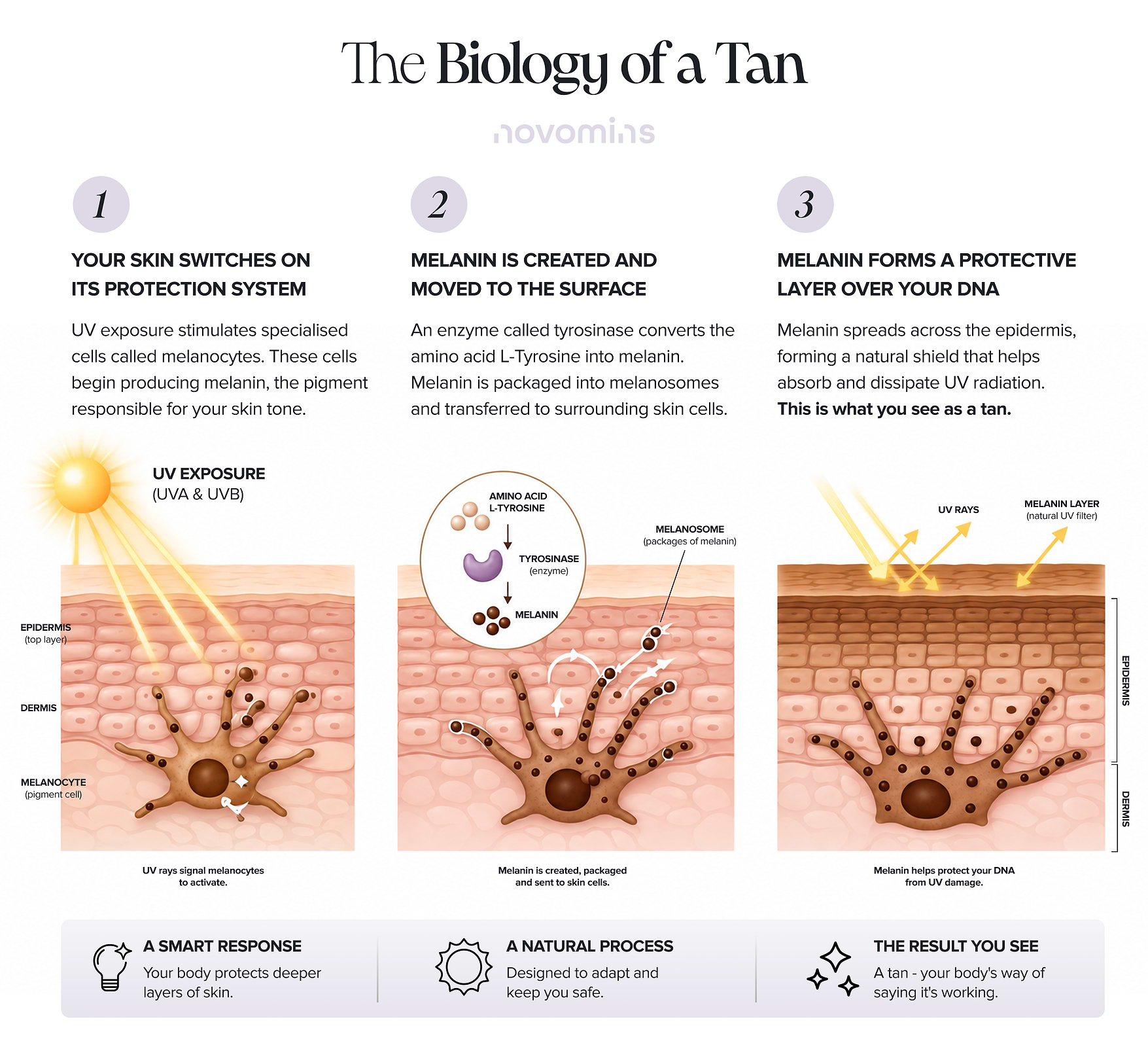
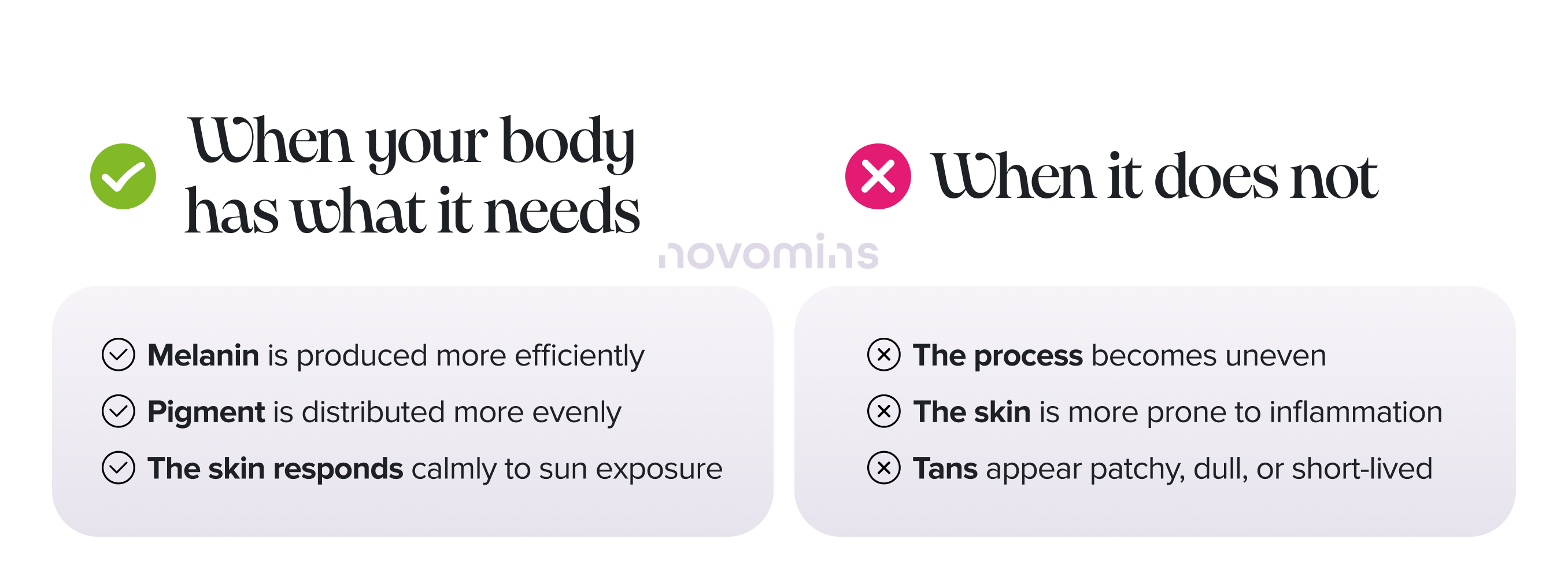
The more efficiently your body produces and distributes melanin, the more even and radiant your tan appears.
This is where things start to differ, because while everyone has this system, not everyone’s body runs it the same way.
Is Tanning Bad for You?
Tanning itself is not the problem, it is how your skin responds to the sun that matters.
Your skin is designed to respond to sunlight. It is not designed to withstand excessive UV exposure.
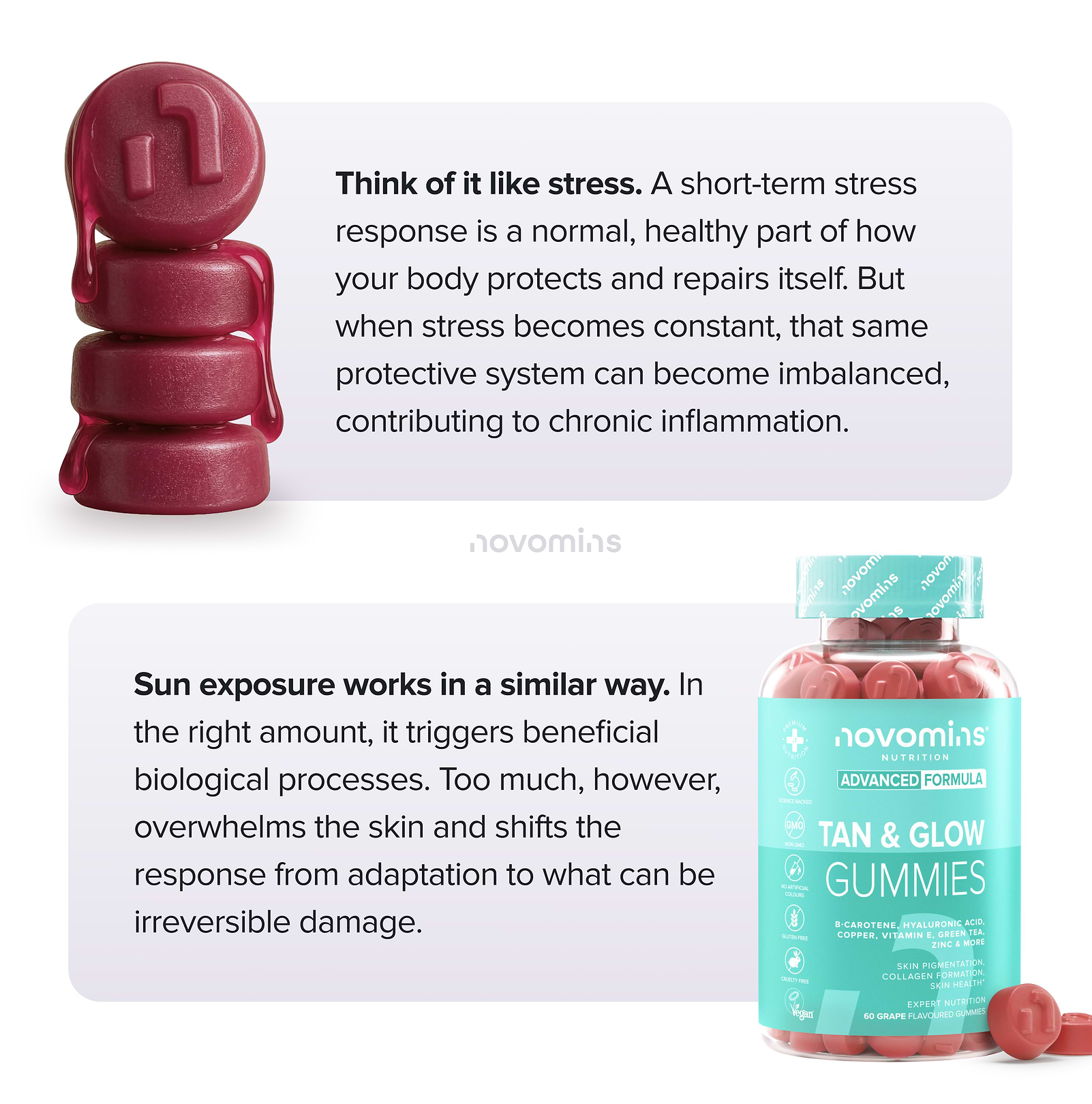
There is an important difference between allowing your skin to gradually adapt to the sun and exposing it to the point of injury.
A healthy-looking tan should never come at the cost of sunburn and permanent damage.
Burning is a sign that UV exposure has exceeded your skin’s ability to protect itself, leading to inflammation, DNA damage and changes within the skin that may be irreversible.
Supporting your skin from within is important, but it should always be paired with sensible sun habits and daily broad-spectrum SPF.
The Difference Between a Good Tan and a Bad Tan
A well-supported tan develops gradually. The skin deepens in tone, looks smoother, and often appears more even and radiant. This reflects a controlled melanin response, where your body is keeping up with UV exposure.
A poor response looks very different. Redness, tightness, heat, and discomfort are signs that your skin is not adapting, it is reacting.
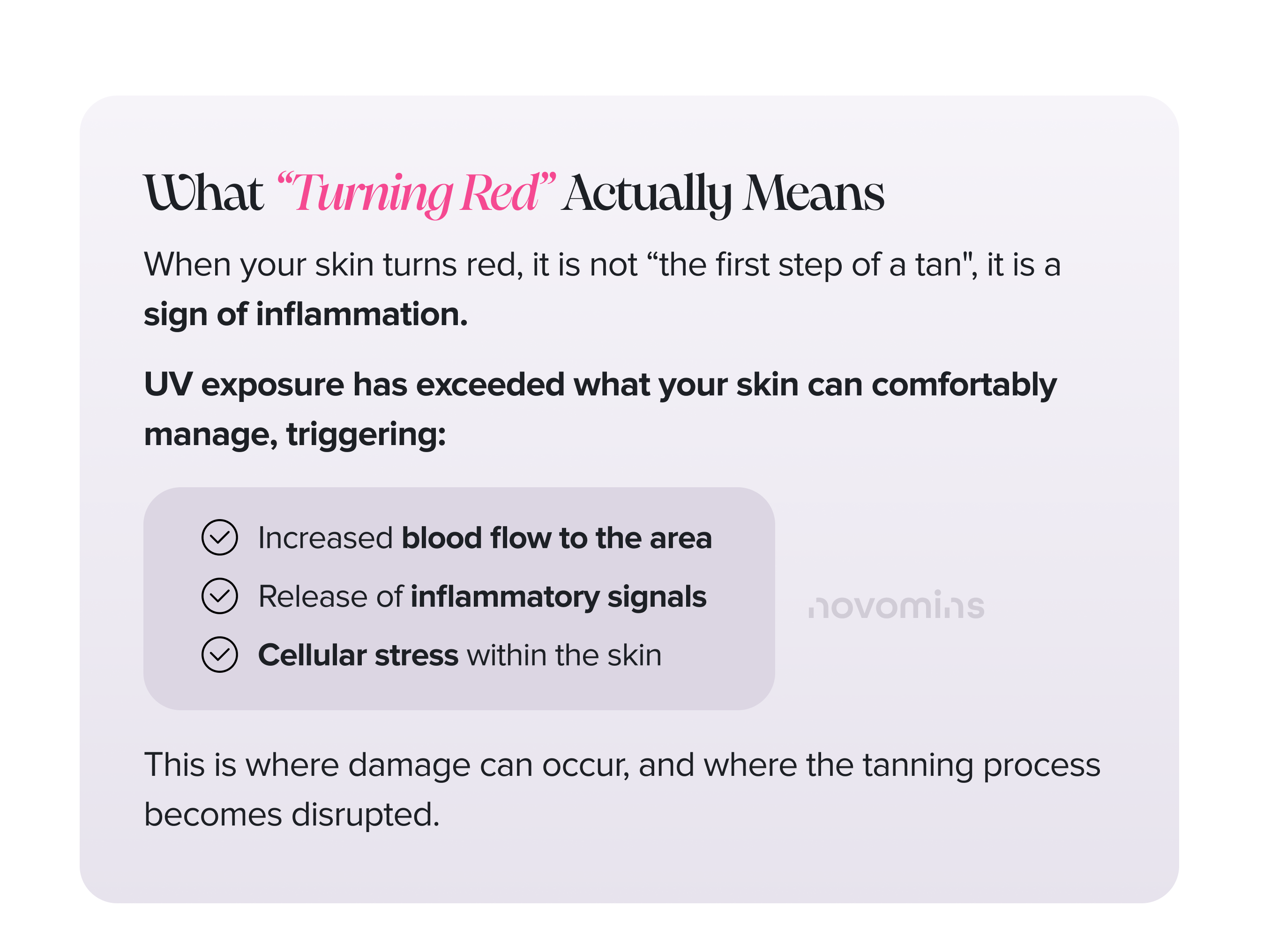
Inflammation does not create a better tan. It creates a stressed skin environment that is more likely to result in uneven colour, sensitivity and long-term damage.
The goal isn’t to spend more time in the sun. It’s to help your skin respond to sunlight in a gradual, balanced way while protecting it from unnecessary damage.
Why Some People Tan Easily (And Others Burn)
How your skin responds to the sun is influenced by both your natural melanin levels and how well your body supports the process.
You have probably seen it… Two people spend the same time in the sun, one develops a smooth, golden glow, while the other turns red within minutes. This is not random.
Your Skin Type & Your Tan
Your natural skin tone reflects how much melanin your body produces at baseline.
- Fair skin tends to have lower melanin levels and burns more easily.
- Medium skin can gradually build a tan with the right exposure.
- Deeper skin tones have higher melanin levels and more built-in protection.
This is often grouped into what is known as the Fitzpatrick scale, which categorises how skin reacts to UV exposure.
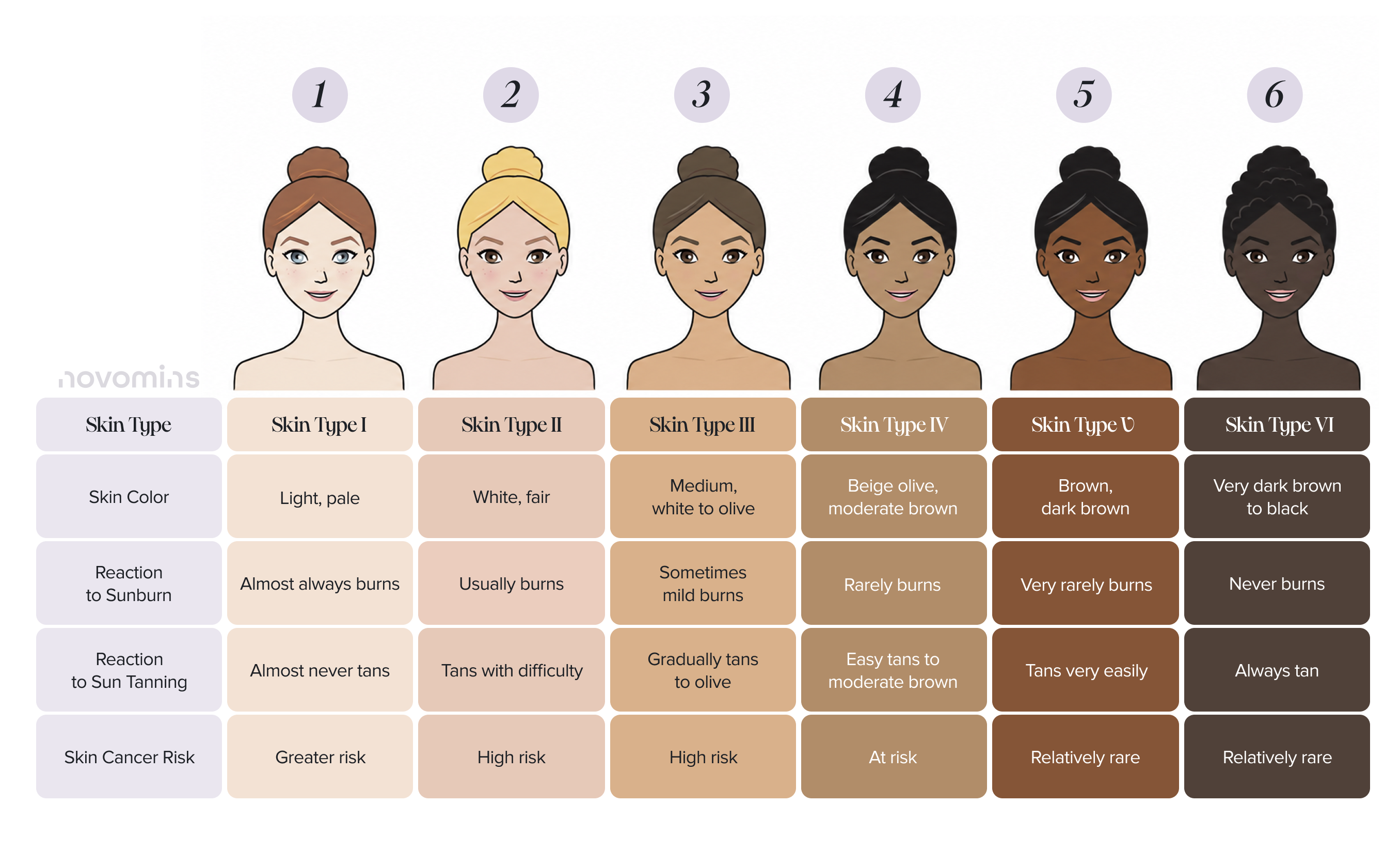
But skin type is only part of the story!
What influences your body's reaction to the sun?
Even within the same skin type, tanning results can look completely different. This is because melanin production is not just automatic, it is nutrient-dependent and influenced by your internal state.
Does sunscreen prevent tanning?
One of the biggest myths about sunscreen is that it prevents tanning. It doesn’t.
SPF helps reduce the amount of UV radiation reaching your skin, lowering the risk of sunburn while still allowing your skin to respond to sunlight. Instead of preventing a tan, it helps your skin develop colour more gradually and safely.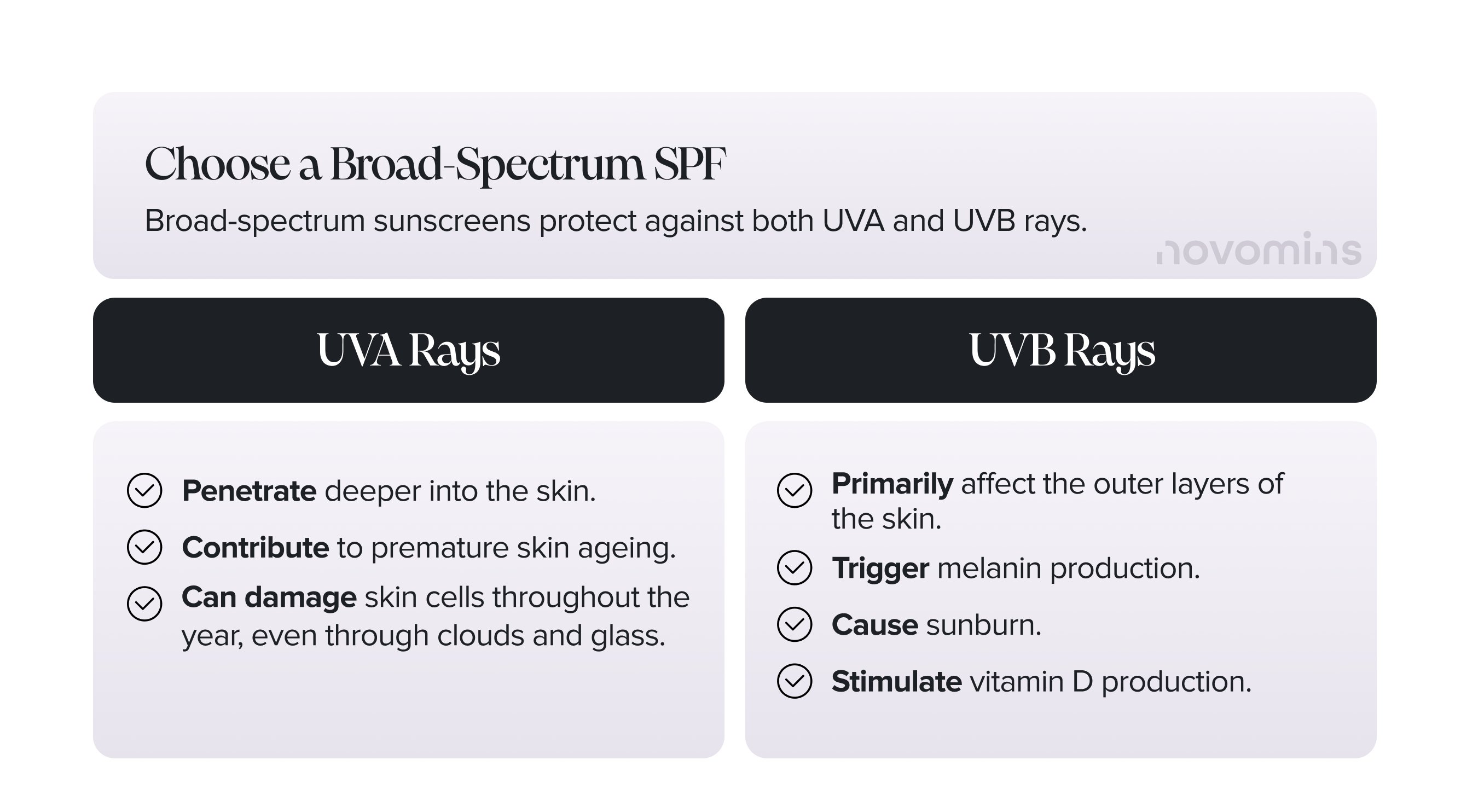
Daily broad-spectrum sunscreen should be part of every tanning routine, whether you’re at the beach, sitting by the pool or simply spending time in a sunny spot near the window.

The Skin Cancer Foundation recommends a water-resistant, broad-spectrum sunscreen with an SPF of 50 or higher for any extended outdoor activities and SPF 30 or higher for daily protection.
A slower tan is often a better tan. Skin that develops colour gradually while protected by SPF is less likely to burn and more likely to maintain a healthy-looking, even glow.
The Role of Nutrition in Tanning
A smooth, even tan is not just created by the sun, it depends on the nutrients your body has available. This is the part that is often overlooked.
Most people focus on exposure, when the real difference in how your tan looks comes down to what your body can do with that exposure.
Melanin production is not automatic. It is a biochemical process that relies on specific nutrients to work efficiently.
What nutrients can support tanning?
Your body needs the right building blocks to produce and distribute melanin properly:
- Copper contributes to normal skin pigmentation, supporting the enzyme responsible for melanin production.
- Zinc contributes to the maintenance of normal skin and helps protect cells from oxidative stress.
- Vitamin C contributes to normal collagen formation for the normal function of skin and helps protect cells from oxidative stress.
How to support tanning internally?
Tanning is not just happening on the surface, it is a reflection of how well your body is functioning beneath it.
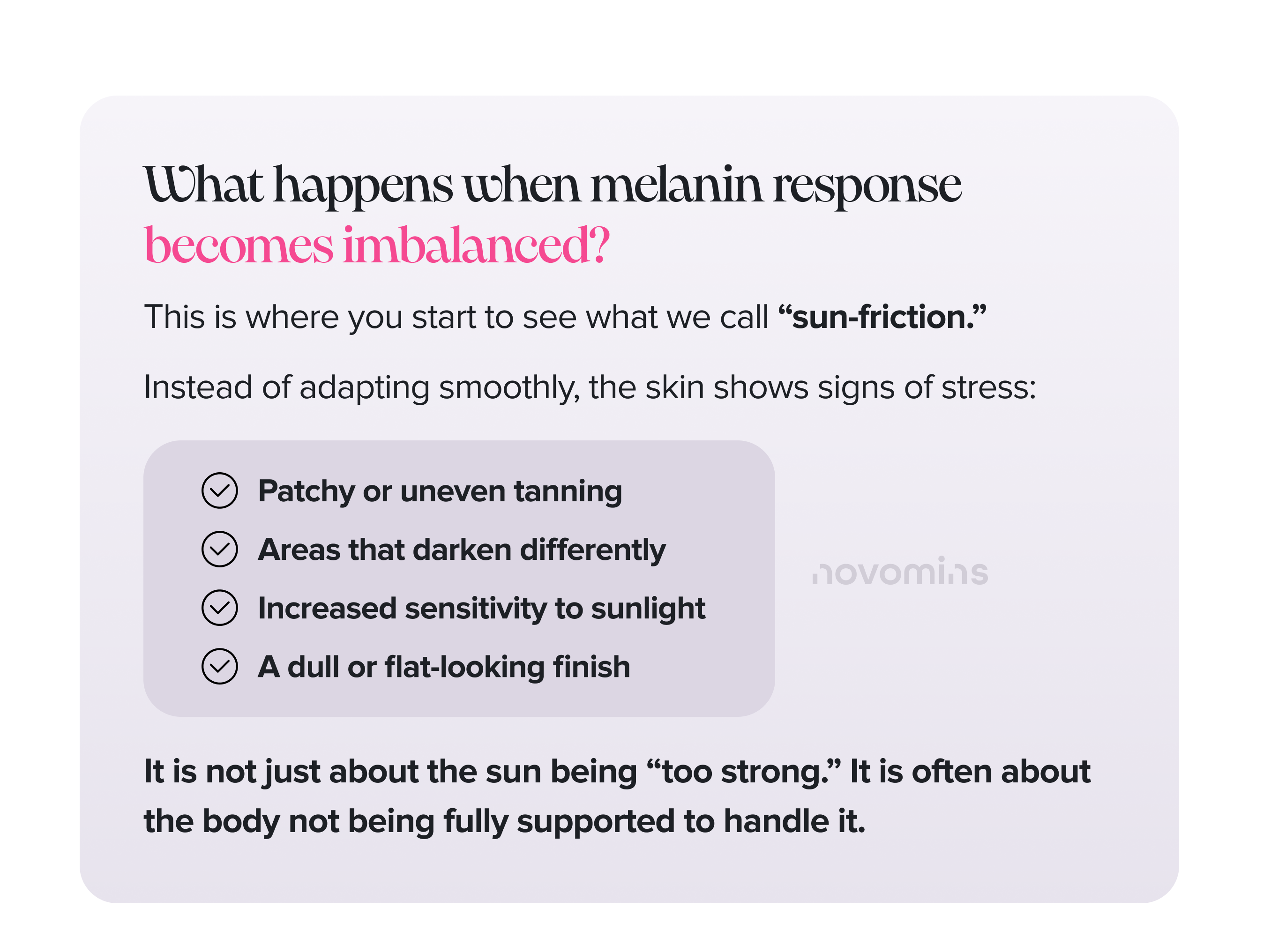
When support is lacking pigment distribution can become inconsistent and skin can appear dull or patchy. Hormonal shifts, lifestyle stress, or changes in routine can all influence how your skin responds to sunlight.
When your internal environment is supported, your skin responds differently. Not with stress or imbalance, but with a glow that looks even, calm, and naturally radiant. And this is where the conversation starts to shift, from chasing the sun, to supporting your skin from within.
Sunlight and Vitamin D: The Missing Conversation
Sunlight is your body’s primary source of vitamin D, and it plays a role in overall health.
While a golden glow is the visible result of sun exposure, UVB rays also trigger the production of vitamin D, a nutrient that can be difficult to obtain in sufficient amounts from food alone.
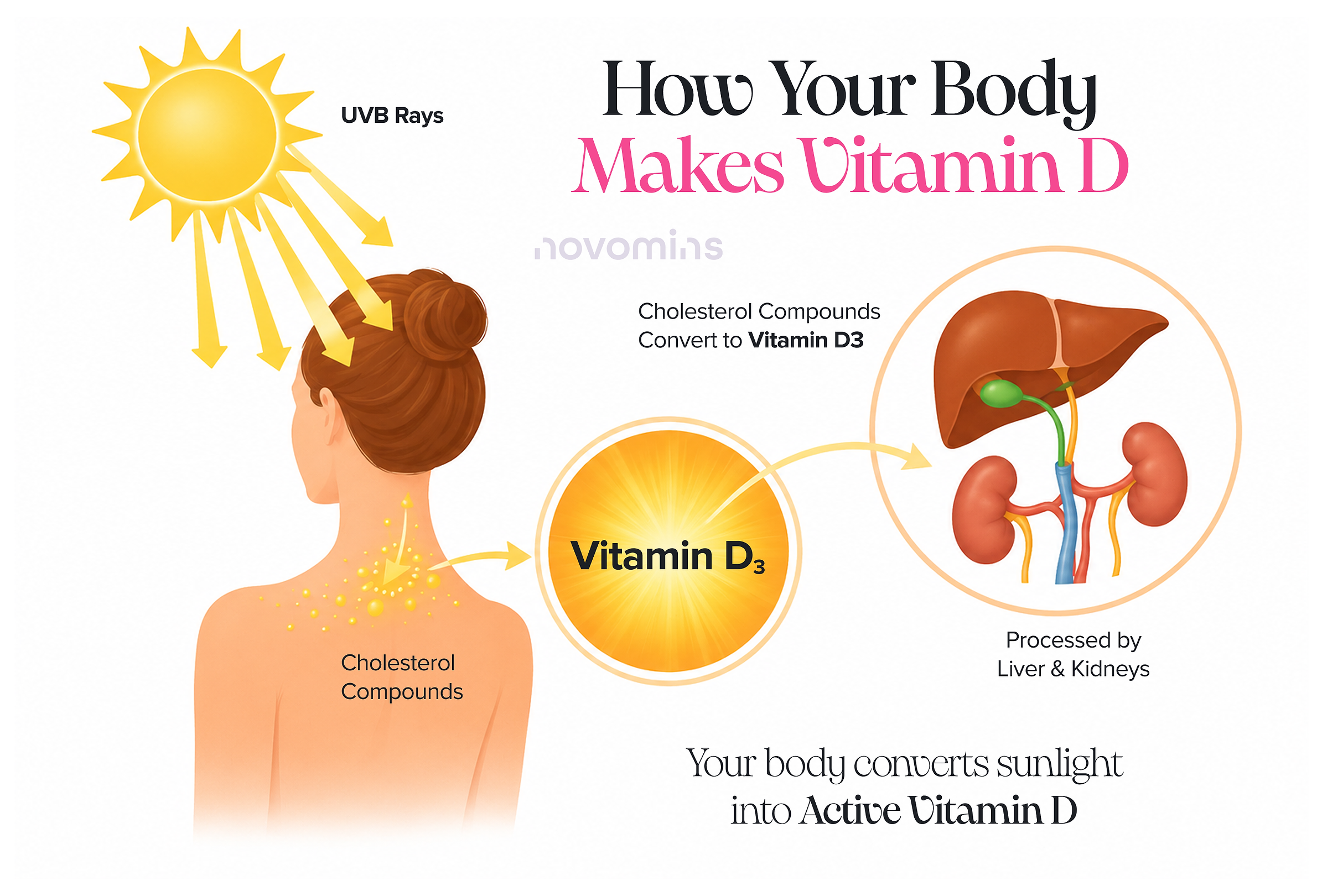
How Does the Body Make Vitamin D?
When UVB rays reach your skin, they interact with cholesterol compounds to produce vitamin D3. This is then converted by the liver and kidneys into its active form, ready for the body to use.
Why is vitamin D important?
Vitamin D contributes to:
- The normal function of the immune system
- The maintenance of normal bones and teeth
- Normal muscle function
This is why sunlight has always been part of the bigger picture, not just for how you look, but for how your body functions.
Should you stay out of the sun completely?
When sun exposure is very limited, vitamin D levels can become low.
Vitamin D contributes to the normal function of the immune system, normal muscle function, and the maintenance of normal bones and teeth.
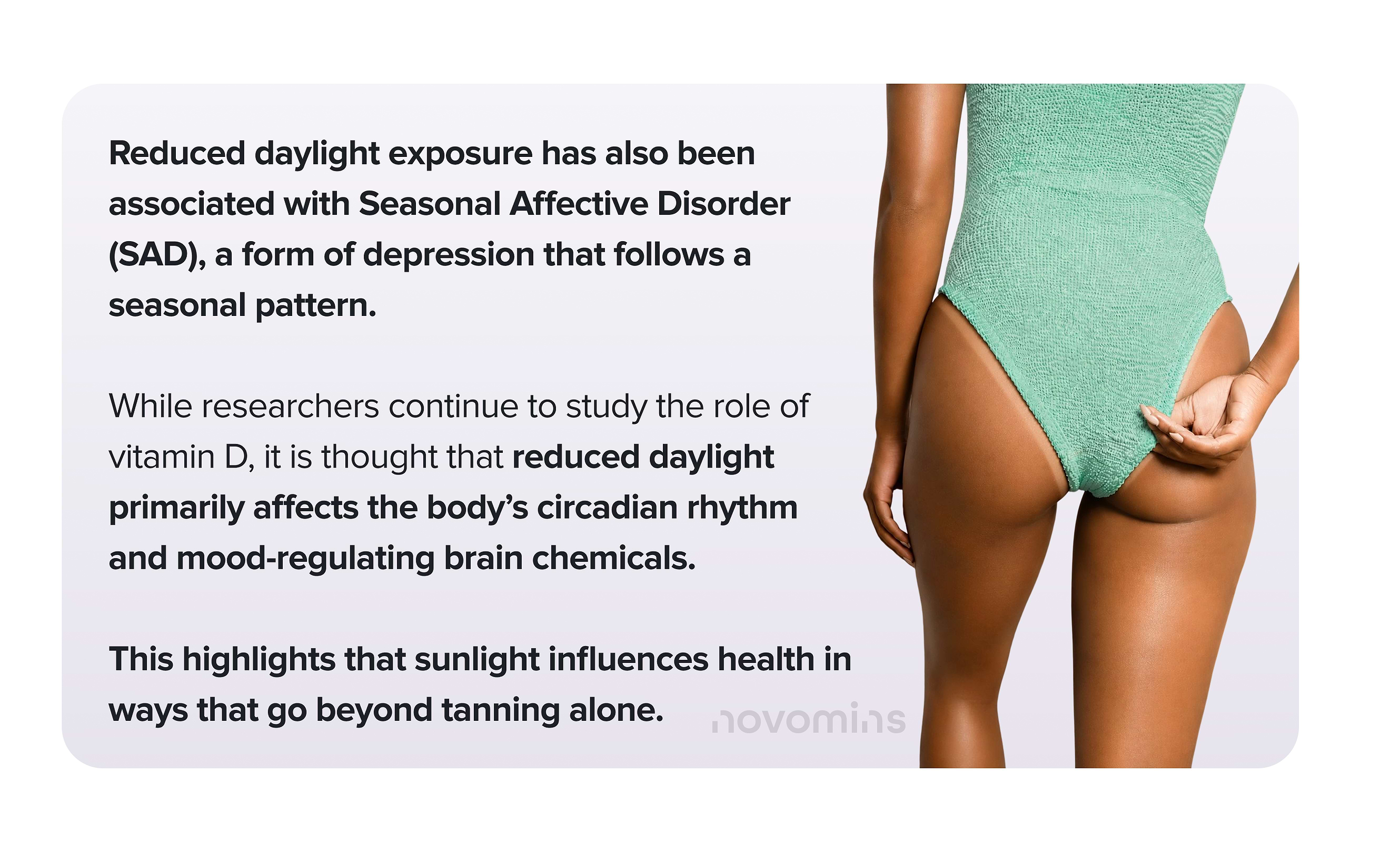
The goal isn’t prolonged sun exposure or avoiding the sun altogether. It’s finding a healthy balance through appropriate sun habits, daily broad-spectrum SPF and sensible time outdoors.
Does skin tone affect vitamin D production?
Yes, and this is where things become more individual.
Melanin acts as a natural filter, which means:
- Fairer skin produces vitamin D more quickly with less sun exposure
- Darker skin tones require longer exposure to produce the same amount
This does not mean one is better than the other, it simply means your needs are different.
Why Tanning Is More Than Skin Deep
It is easy to think of tanning as something that happens to your skin. In reality, it is something your body is actively managing, coordinating, and responding to.
Every stage of the process, from melanin production to how evenly that pigment is distributed, depends on your internal environment.
Introducing Tan & Glow Gummies: Support Your Glow From Within
A beautiful, even tan is never just about the sun. It reflects your internal state, from nutrient levels to how well your skin is protected from oxidative stress.
Novomins Tan & Glow Gummies is formulated to support this process from within. Not by replacing the sun, but by helping your body respond to it more efficiently.
Rather than focusing on one hero nutrient, Tan & Glow Gummies work as a multi-layered system, using ingredients known to support:
- Melanin production
- Skin structure and integrity
- Cellular protection from oxidative stress
- Circulation and nutrient delivery to the skin
Because a glow that lasts is never one-dimensional, it is built across multiple systems, working together. And that is exactly how this formula is designed.
The 4 Pillars of Tan & Glow Gummies
Novomins Tan & Glow Gummies is formulated as a layered approach, targeting the key biological processes behind how your skin produces, distributes, and maintains pigment.
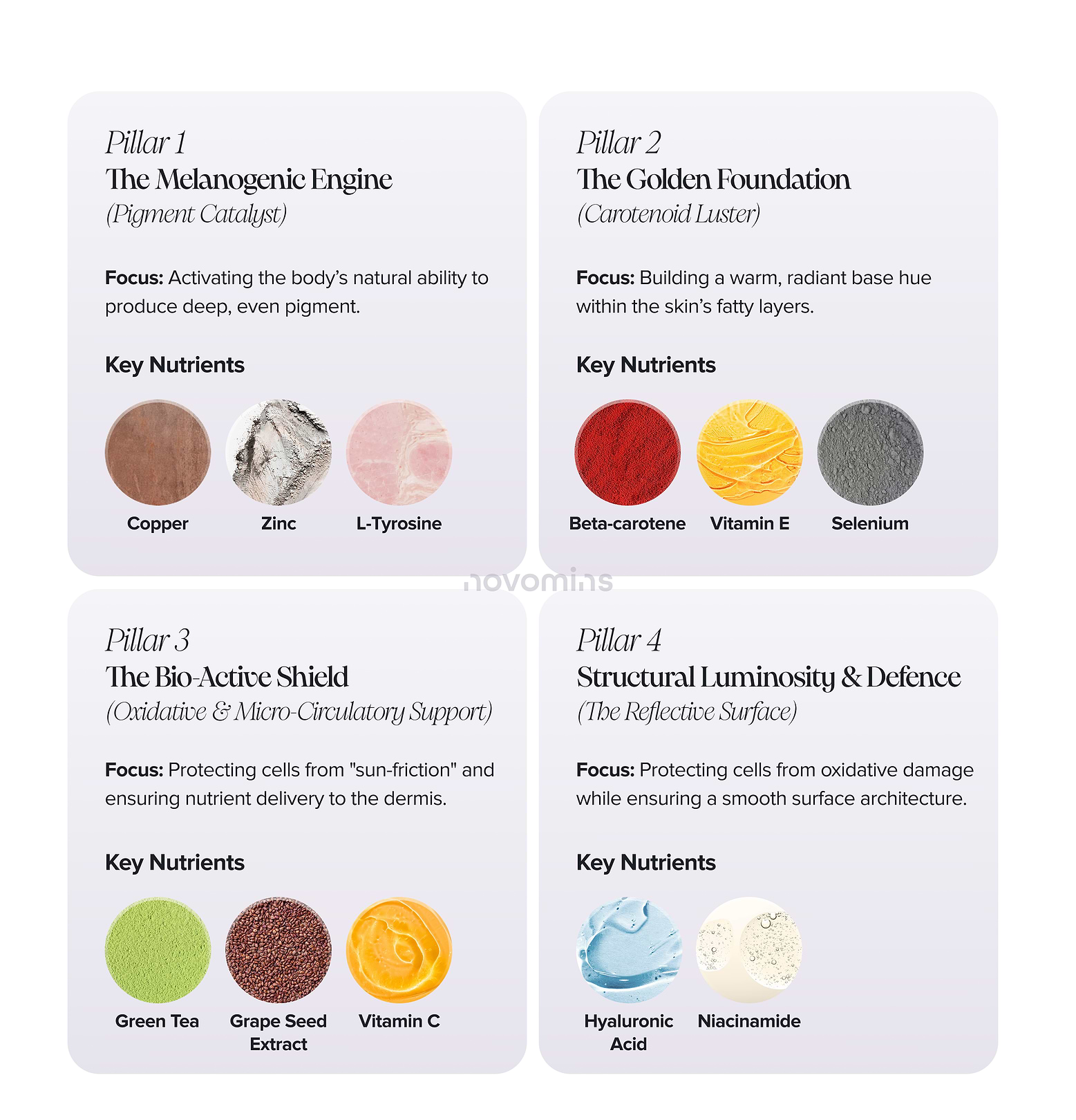
Pillar 1: The Melanogenic Engine (Pigment Catalyst)
Focus: Activating the body’s natural ability to produce deep, even pigment.
This is where tanning begins.
- Copper contributes to normal skin pigmentation by supporting melanin production.
- Zinc contributes to the maintenance of normal skin and helps protect cells from oxidative stress, supporting healthy skin during the tanning process.
- L-Tyrosine is a building block your body uses to create melanin.
Together, these nutrients can help ensure pigment is not only produced, but produced efficiently and evenly.
Pillar 2: The Golden Foundation (Carotenoid Luster)
Focus: Building a warm, radiant base hue within the skin’s fatty layers.
A glow is not just about depth, it is about tone.
- Beta-carotene accumulates naturally within the skin and has been studied for its ability to support a warmer-looking complexion.
- Vitamin E helps protect skin cells from oxidative stress caused by environmental exposure.
- Selenium contributes to the protection of cells from oxidative stress by supporting the body’s antioxidant defences.
This layer can support the skin for that soft, golden undertone rather than a flat or uneven finish.
Pillar 3: The Bio-Active Shield (Oxidative & Micro-Circulatory Support)
Focus: Protecting cells from "sun-friction" and ensuring nutrient delivery to the dermis.
Sun exposure creates oxidative stress. How your body manages it determines the outcome.
- Green Tea Polyphenols are widely studied antioxidants that may help support the skin’s natural defences against oxidative stress.
- Grape Seed Extract is rich in OPCs, antioxidants studied for supporting skin integrity and healthy microcirculation.
- Vitamin C contributes to normal collagen formation for normal skin function and helps protect cells from oxidative stress.
Rather than simply focusing on colour alone, this layer can support the skin’s natural resilience, creating the conditions for a smoother, healthier-looking, more radiant tan.
Pillar 4: Structural Luminosity & Defence (The Reflective Surface)
Focus: Protecting cells from oxidative damage while ensuring a smooth surface architecture.
Even pigment needs a healthy surface to look its best.
- Hyaluronic Acid has been found to support skin hydration for a smoother, plumper-looking complexion.
- Niacinamide is widely studied for supporting the skin barrier and promoting a smoother, more even-looking complexion.
This layer can support that smooth, luminous finish where your glow looks clear, even, and well-defined.
Together, these four pillars work as one system. Not just to help you tan, but to support your skin in a way that looks balanced, supported, and naturally radiant.
Who are Tan & Glow Gummies for?
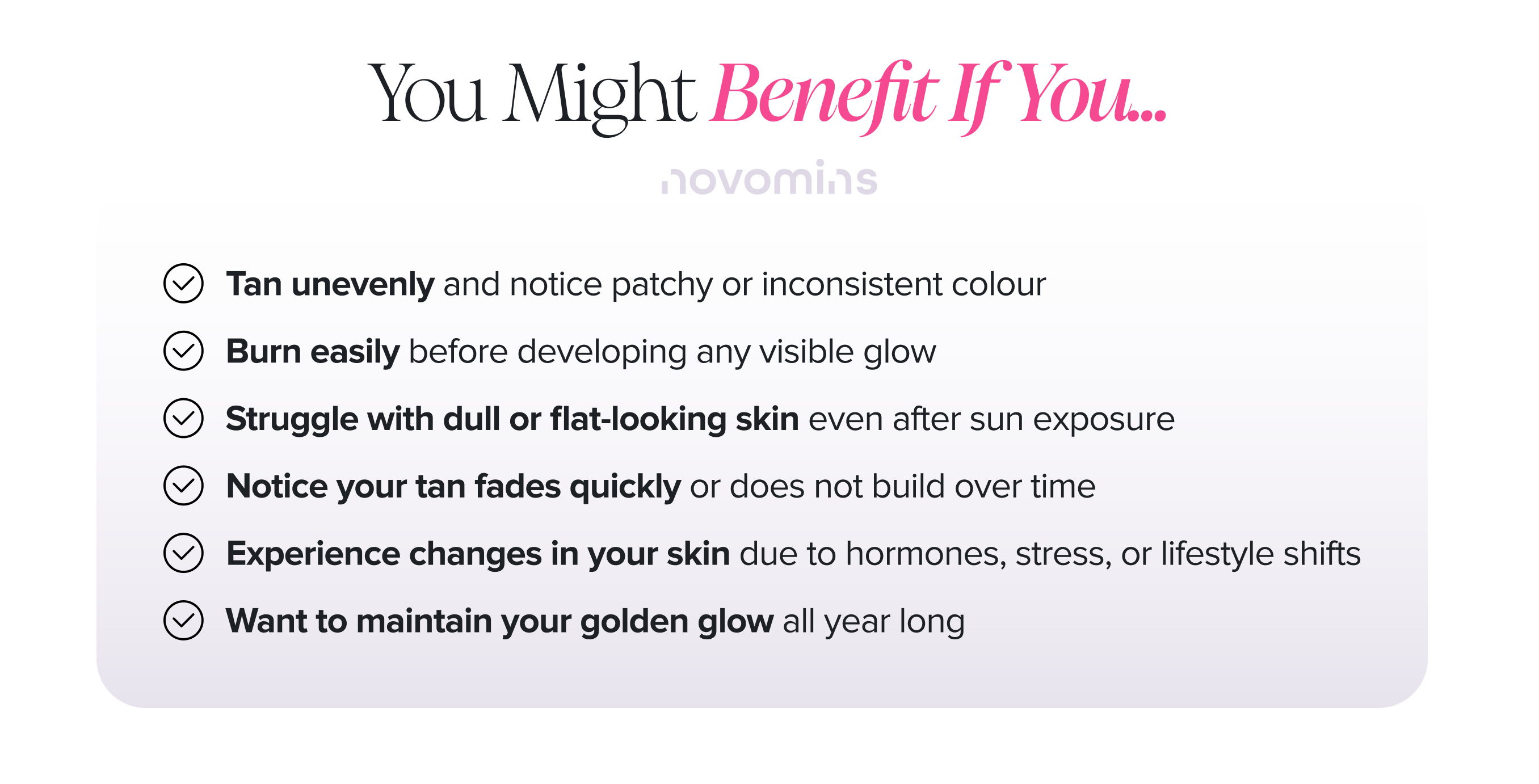
If your tan has ever felt unpredictable, uneven, or short-lived, this is where internal support starts to matter.
Not everyone struggles with tanning in the same way, but many people notice that their skin does not always respond how they expect it to.
It Is Not About Changing Your Skin Type
Novomins Tan & Glow Gummies are not created to force your skin to behave differently, rather they are formulated to support your natural processes, whatever your baseline may be.
Whether your skin is fair, olive, or deeper in tone, the goal is the same: a response that feels more balanced, more even, and more supported - all year round!
Because the best kind of tan is not the most intense one, it is the one that looks natural, smooth, and effortlessly healthy. And that starts long before you step into the sun.
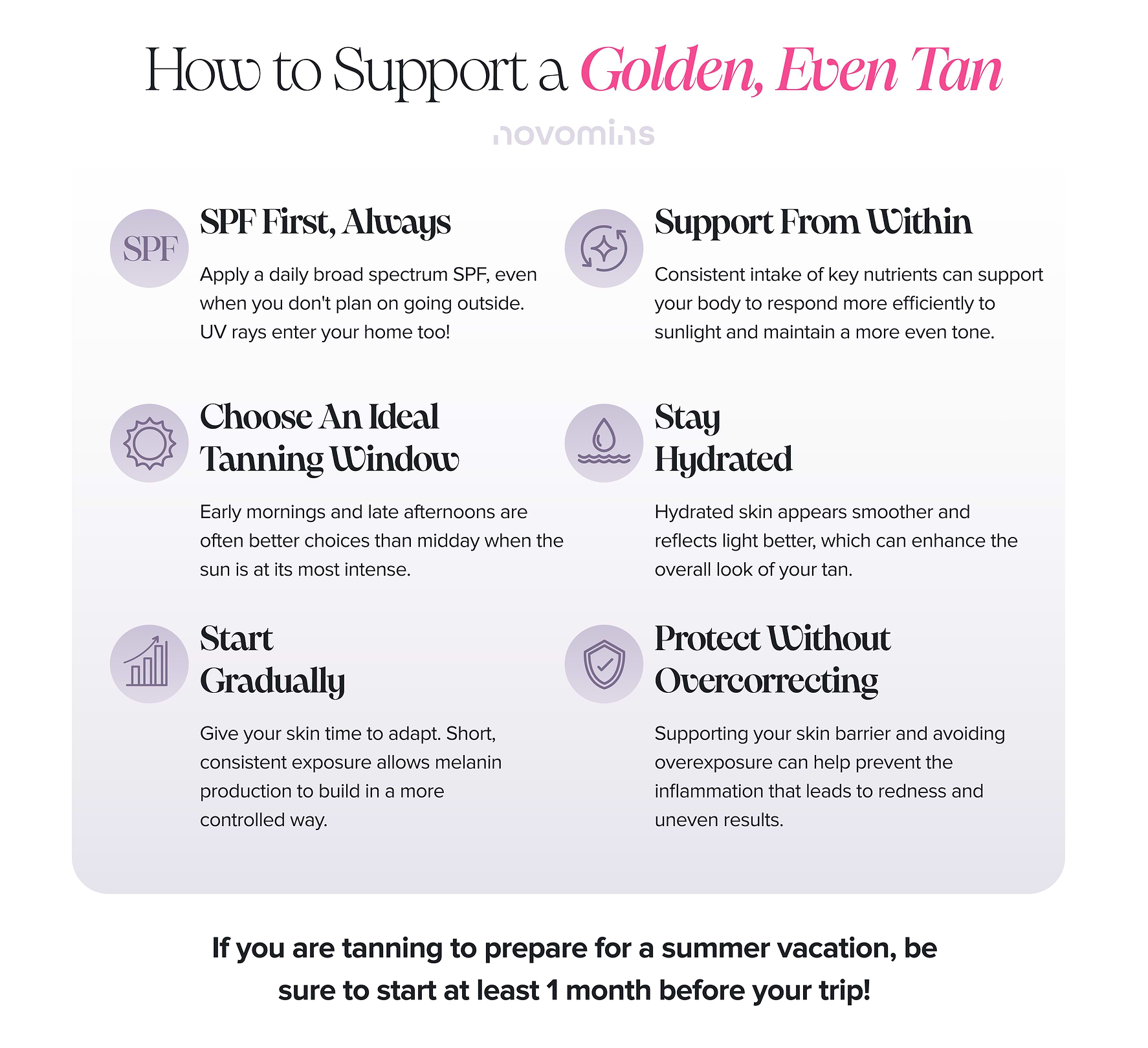
How to Support a Golden, Even Tan
A better glow is built through small, consistent habits that support your skin before, during, and after sun exposure.
It does not need to be complicated. In fact, the simplest approach is often the most effective.
Final Thought: Your Glow, Done Differently
Tanning was never meant to be something you fear or force. It is something your body knows how to do, when it is supported properly.
The difference between a tan that looks stressed and one that looks radiant often comes down to what is happening beneath the surface.
When your body has the nutrients it needs, when your skin is supported rather than overwhelmed, the result is not just colour.
It is clarity, smoothness, and that effortless, healthy-looking glow.
So instead of chasing the sun or avoiding it completely, take a more balanced approach. Support your skin, apply your SPF, work with your biology, and let your glow reflect it.
FAQs
What is tanning and how does it work?
Tanning is your skin producing melanin in response to UV exposure to help protect deeper layers of the skin.
Is tanning bad for your skin?
Tanning itself is a natural process. Problems arise when exposure leads to inflammation, such as redness or burning.
Does sunscreen stop you tanning?
No. Sunscreen helps protect your skin from excessive UV damage while still allowing it to gradually produce melanin.
Why do I burn instead of tan?
This can be influenced by your skin type, melanin levels, and how well your body is supported nutritionally.
How can I tan more evenly?
Gradual exposure, consistent nutrition, hydration, and supporting your skin from within can help improve evenness.
Does nutrition affect tanning?
Yes, nutrients like copper, zinc, and vitamin C play a role in skin function and pigmentation processes.
How much sun do I need for vitamin D?
This varies based on skin tone, location, and time of year. Fairer skin generally requires less exposure than darker skin tones.
Are tanning supplements effective?
Formulations that support skin health, pigmentation pathways, and oxidative balance may help the skin respond more evenly to sun exposure.
How long does it take to see results?
This varies, but consistent support over several weeks is typically needed to notice visible changes in skin appearance.
Disclaimer
This content is for informational purposes only and is not intended as medical advice. Food supplements should not be used as a substitute for a varied, balanced diet and a healthy lifestyle.
If you are pregnant, breastfeeding, taking medication, or have an existing medical condition, please consult your healthcare professional before use.
Individual responses to supplements may vary.


